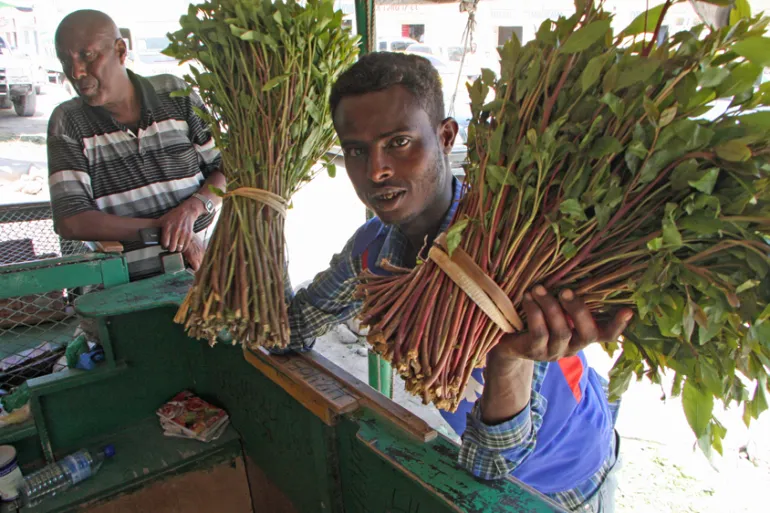
Hargeisa, Somaliland – Every day trucks loaded with the narcotic plant khat, grown in northeastern Ethiopia, hurtle along rough roads through the desert to make fresh deliveries to eager customers across Somaliland.
It’s estimated that 90 percent of adult males in the autonomous region of Somaliland chew khat for mirqaan, the Somali word for its euphoric effect.
Khat has become so enmeshed with Somaliland’s culture and daily life it has become an important tax earner for the government. In 2014, khat sales generated 20 percent of the $152m budget.
But despite this windfall, plenty of critics highlight the disrupting influence khat has on family life – from financial waste to domestic violence – and on the society at large.
“The problem comes down to the man not being part of the family and the woman being left to do everything,” said Fatima Saeed, a political adviser to the opposition Wadani Party, who previously worked for 15 years with the United Nations.
Men sit for hours chewing – it’s very addictive.
“Men sit for hours chewing – it’s very addictive.”
Saeed highlighted potential side effects of khat chewing. “It can bring about hallucinations, sleeplessness, loss of appetite, deaden sexual urges – while in others it increases them.”
Others noted the flipside of the economic impact.
“Khat is a massive burden on Somaliland’s fragile economy since it means that a large percentage of its foreign currency is used to purchase khat,” said Rakiya Omaar with Horizon Institute, a Somaliland consultancy firm helping communities transition from underdevelopment to resilience and stability.
Somaliland spends $524m a year – about 30 percent of its gross domestic product – on khat from Ethiopia, said Weli Daud with the Somaliland Ministry of Finance.